Introduction to Digital Music Music Streamers, CD Players and the DAC that ties them together
Streaming is how most of us listen to music today. The exception is the dedicated enthusiasts who go deeper, into formats like vinyl and CD, and those communities keep growing.
Vinyl is as popular as ever. And, believe it or not, CD sales have been climbing since around 2017. You can see the rebound in the physical layer of the chart below. With digital media keeping on par, let's learn all we can about how to get the best sounding music digital we can.
US recorded music revenues 1973–2025
- Physical (CD & vinyl)
- Digital downloads
- Streaming
- Sync licensing: fees paid when recorded music is used in film, TV, ads and video games.
Physical formats grew from about $1 billion in 1973 to a peak of about $8.3 billion in 1999, then fell as digital downloads rose from 2004. Streaming took over from 2015 and reached about $9.6 billion in 2025, while physical sales have been climbing again since around 2017. Total revenue in 2025 is about $11.6 billion.
If you’re new to hi-fi, streaming and CDs are both great ways in on a modest budget. Whichever path you take, you’ll meet a DAC somewhere along the way. So let’s start there.
01 · The basics
What is a DAC?
“10001110101”
Digital, digital, digital. Almost everything in our world runs on it now. Yes, the Matrix has us. From the phone in your hand to the way you pay for goods, it’s mostly ones and zeros. No revelation there.
Sound itself isn’t digital, though. A bird singing or someone clapping in the room with you creates a sound wave. That wave moves the air, the air moves your eardrum, and you hear it.
So how does a stream of data from a server, a satellite or a disc end up as a sound wave hitting your ear? Somewhere in the signal chain (more on that in our The Vinyl Experience post) sits a DAC. Even your phone has one, just not a very good one.
A DAC, or digital-to-analog converter, takes those ones and zeros and turns them into a continuously changing electrical signal. Your amplifier boosts that signal and sends it to your speakers, which turn it back into a sound wave. In a nutshell: digital in, analog out, so we can hear it.
- Streamer or CD
- DAC
- Amplifier
- Speakers
Why a good DAC matters
How a DAC handles those ones and zeros varies a lot from one to the next. Picture them as cattle being herded through a gate. The gate can be wide or narrow. The herd can be guided through calmly and in order, or it can be chaos: cattle bouncing off each other, some lying down, some going in backwards.
It’s an exaggeration, but you get the idea. A good DAC, one designed specifically for music, keeps the herd in line. And it sounds noticeably better than a generic DAC built without music in mind.
Hi-res music needs a DAC that keeps up
Here’s the part that often gets overlooked: hi-res music is now readily available on the major streaming platforms, including Spotify, Apple Music, Tidal and Qobuz. Most of us already pay for one of them. Without a decent DAC, you’re not really hearing how good that music can and should sound.
Hi-res comes in levels, and these days “CD quality” sits at the lower end. The top tier, even for streaming, is 24-bit/192 kHz.
16-bit / 44.1 kHz
About 1,411 kbps of stereo data. Now the lower end of the spectrum.
24-bit / 192 kHz
About 9,216 kbps. Roughly 6.5× the data of a CD, if your DAC can use it.
Without a good DAC, you may not be getting all of that data, and so not all of that quality. That’s why a DAC is worth talking about.
If you are moved by the power of music, then this is something you should know about.
02 · Sources
Music streamers
A music streamer is a source, just like a CD player or a turntable. You control it with an app on your phone or tablet, which acts as the remote: search and browse music, build playlists, play, pause, adjust the volume and a lot more.
The music itself doesn’t play from your phone, though. The streamer pulls it straight from your Wi-Fi, so you get the best connection, and a call or notification never interrupts what you’re listening to.
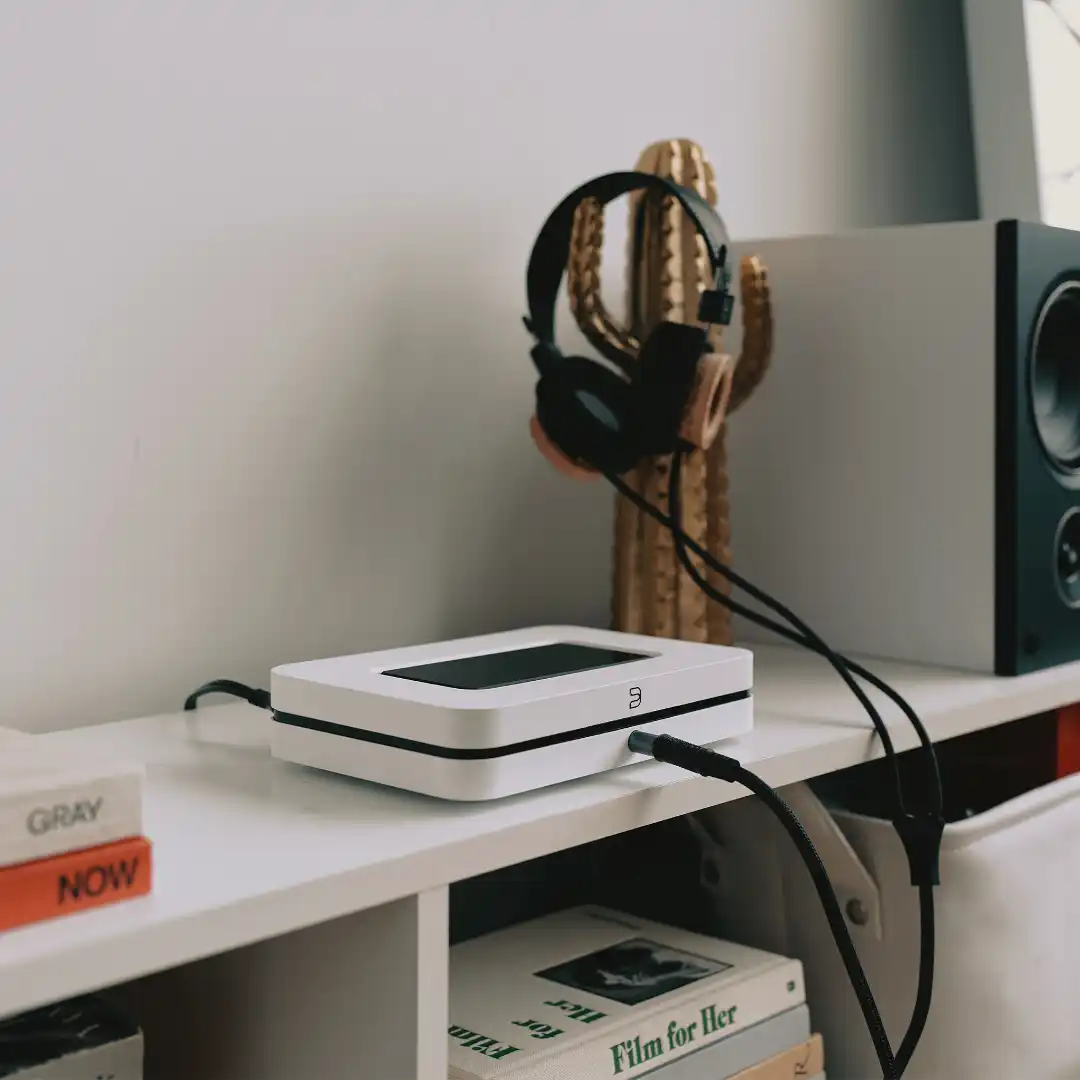
The modern-day "tuner"
Pictured is our most popular streaming product: the Bluesound Node. We have about a dozen on display in the showroom, set up on all kinds of systems. These also stream internet radio.
Think of it as the modern-day “tuner,” if you’re old enough to remember those like me. It also has an extremely good DAC built in.
On some systems we route the Node into an external DAC for even better sound, and that’s where the fun begins. Pairing a streamer or CD transport with an external DAC is how you start dialing in a sound that suits you and your music. Just like amplifiers, every DAC has its own character.
Mixing and matching is what hi-fi is all about, and it’s why this is one of the most rewarding hobbies a music lover can have.
03 · Sources
CD “player” or CD “transport” That is the question
There are many ways to play a Compact Disc. In Hi-Fi, it usually comes down to a CD “player” or a CD “transport,” and the difference is the DAC. A player has one built in, and its quality depends on the make and model. A transport leaves the converting to a separate DAC. A CD Player has a DAC built in but can also have a digital out for an external DAC too.
-
CD player
DAC built in. Analog outputs (usually RCA) on the back run straight to your amp. Some add a digital output for an external DAC.
-
CD transport
Digital outputs only. The transport reads the disc and an external DAC does the converting.
-
Both outputs
Digital and analog outputs. Use the internal DAC now, or send the signal to an external DAC later.
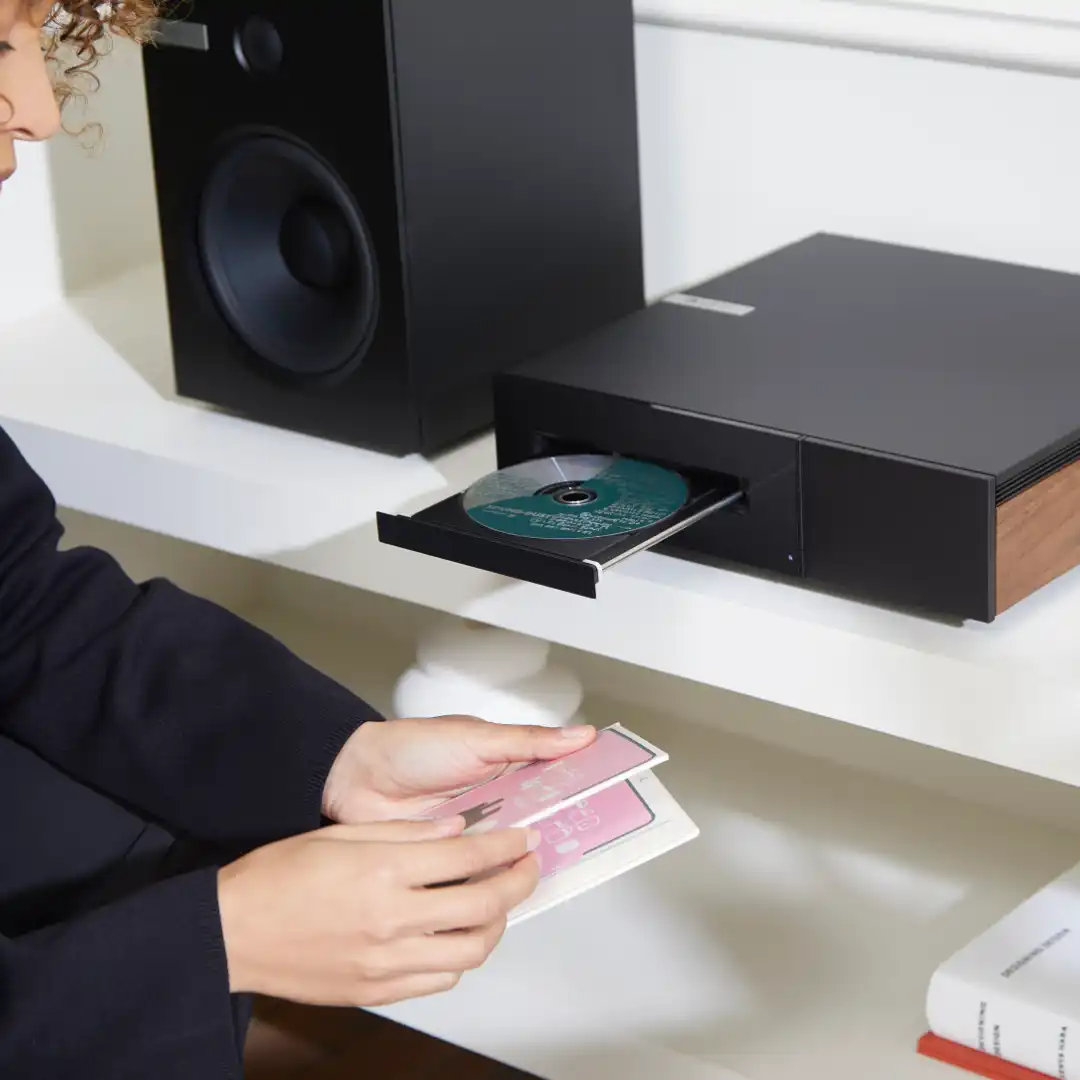
Cambridge Audio Evo CD
A perfect example of a CD transport. The Evo CD does one job and does it well: it reads your discs and sends a clean digital signal on to a DAC. There’s no converter built in, because the one doing the converting lives in the rest of your system.
It’s designed as the companion to Cambridge Audio’s Evo streaming amplifiers, matching them in size and finish right down to the walnut side panels. Pair it with an Evo, and your CDs and your streaming library run through the same DAC in one tidy, good-looking stack.
Just getting into CDs? A player with both outputs is a great entry point. Play your discs right away through the built-in DAC, then add a better external DAC later as your system grows.
04 · The gear
DACs
That brings us to the star of the show. You probably use a DAC many times a day without realizing it, every time your phone plays a song or a video. By now you know what it does.
What sets one DAC apart from another goes beyond what we’ve covered: how precise its clock is, for example, and how well it works with the circuitry and components around it. Here are three popular DACs from our shelves.
-
Portable
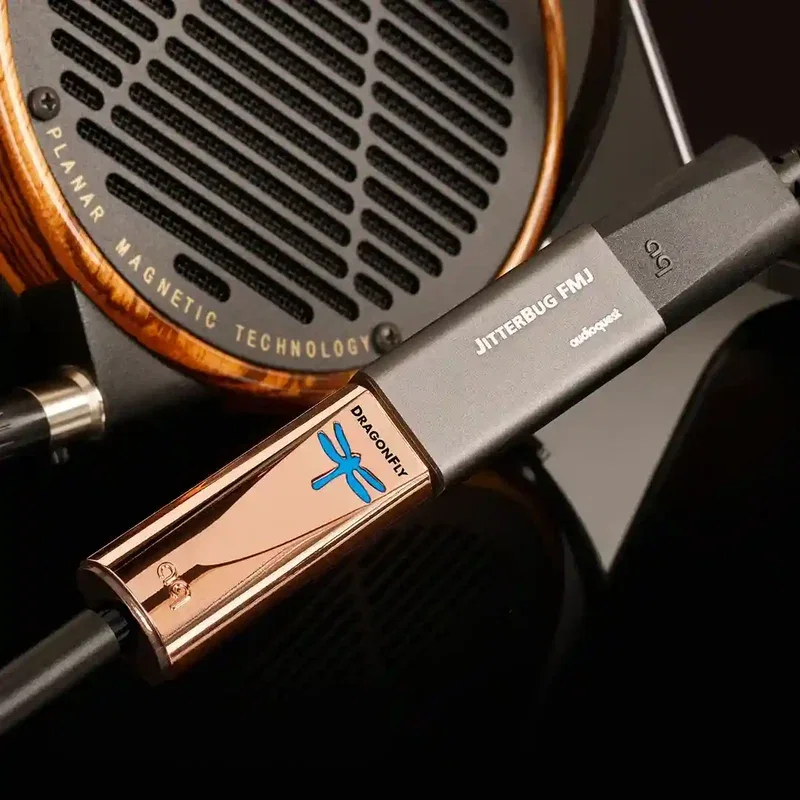
AudioQuest DragonFly Copper
A DAC, preamp and headphone amp that travels with your phone.
$250.00 -
DAC / headphone amp
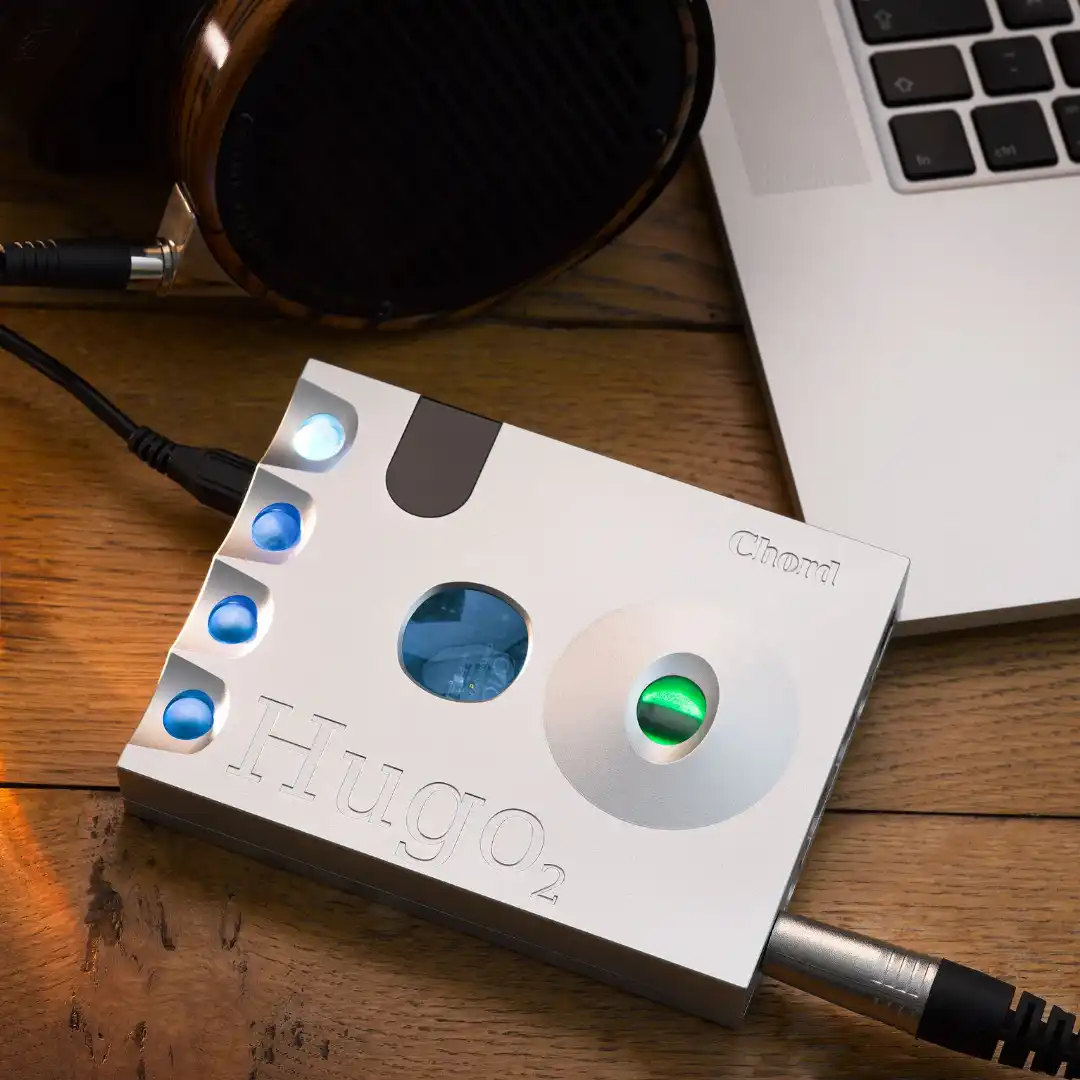
Chord Mojo 2
A battery-powered DAC and headphone amp from one of the best DAC makers in the business.
$650.00 -
Desktop DAC
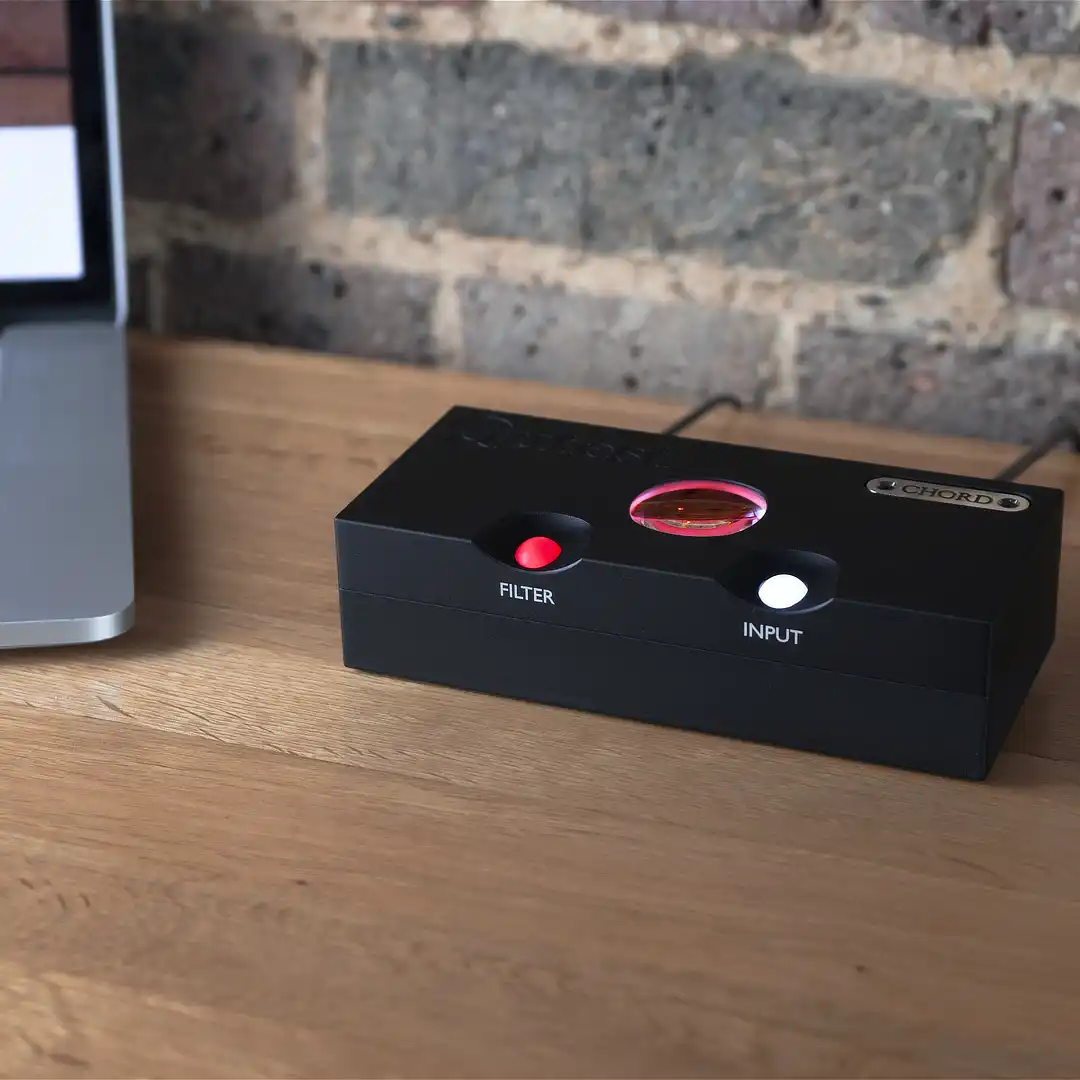
Chord Qutest
Widely considered one of the best DACs in the industry.
$1,795.00
First up is the AudioQuest DragonFly Copper, a DAC, preamp and headphone amp that packs impressive technology into a tiny package. It’s the one to take on the go. With an iPhone, all you need is Apple’s Camera Adapter for a USB connection. Then plug in your wired headphones or run a cable to your system. There are plenty of other ways to connect it, too.
Next is the Chord Mojo 2, a battery-powered DAC and headphone amp that’s just as happy on your desk as in your bag. Chord makes some of the best DACs around, and its Qutest is a desktop DAC widely considered one of the best in the industry.
These three are just a small showcase of what we carry at Audiolab. Our salespeople are extremely well versed in the ways of the force (I mean, DACs). We talk about this stuff for fun.
05 · Why Audiolab
The journey is the Destination
Sure, you can buy a DAC, or any other hi-fi gear, on Amazon or at Best Buy. But then you miss the journey. At Audiolab, we’re on the same path you want to travel, maybe just a little further down the road. That’s what makes us such a good place to help.
We’ve trialed and errored, tested and retested, listened and listened again, for years and decades. The combined knowledge and passion of everyone here is truly special. You won’t find someone who knows as much about washers and dryers as they do about CD players. We love this stuff through and through. We live and breathe it.
No washers or dryers here. Only audio & video.