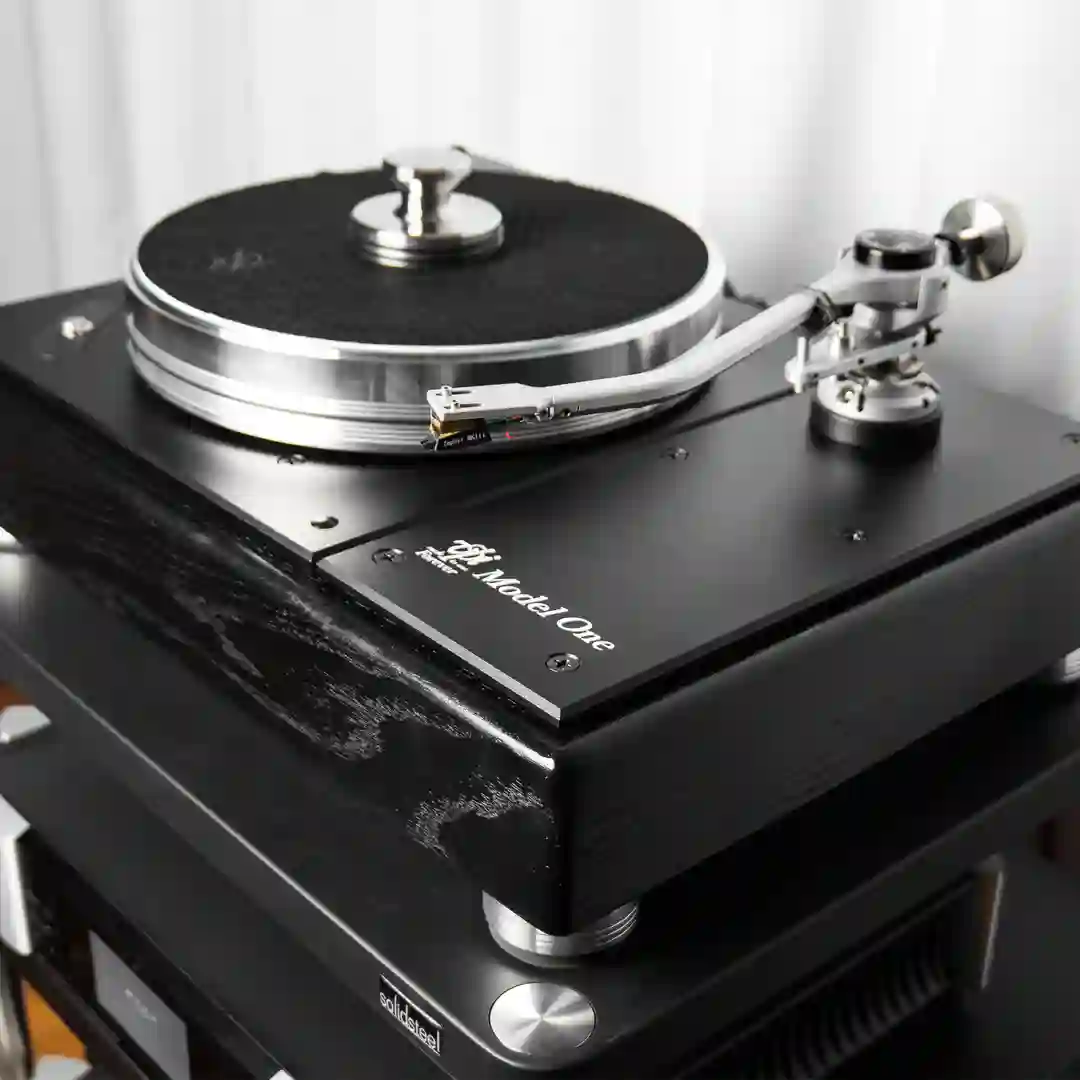
The Anatomy of a turntable
What we are actually looking at
Let’s say you walk into our shop, or you’re surfing our website & see a $1,500 turntable, and probably wonder why it looks so… simple. It’s just a board, a spinning circle, and a stick with a needle, right?
Yes... and no.
Since we opened our doors back in 1958, we’ve probably had thousands of questions about how turntables work. The truth is, a turntable's magic lies in its simplicity. Because a turntable has exactly one job, which is dragging a microscopic diamond through a tiny groove to pick up microscopic vibrations, without picking up anything else. That is the key, to not pick up “anything else”. We’ll get into what that means later.
To understand why some turntables cost $200 and others cost the equivalent of a small house, you just need to know the basic anatomy. Let’s pop the hood.
What Makes up a turntable
The Plinth
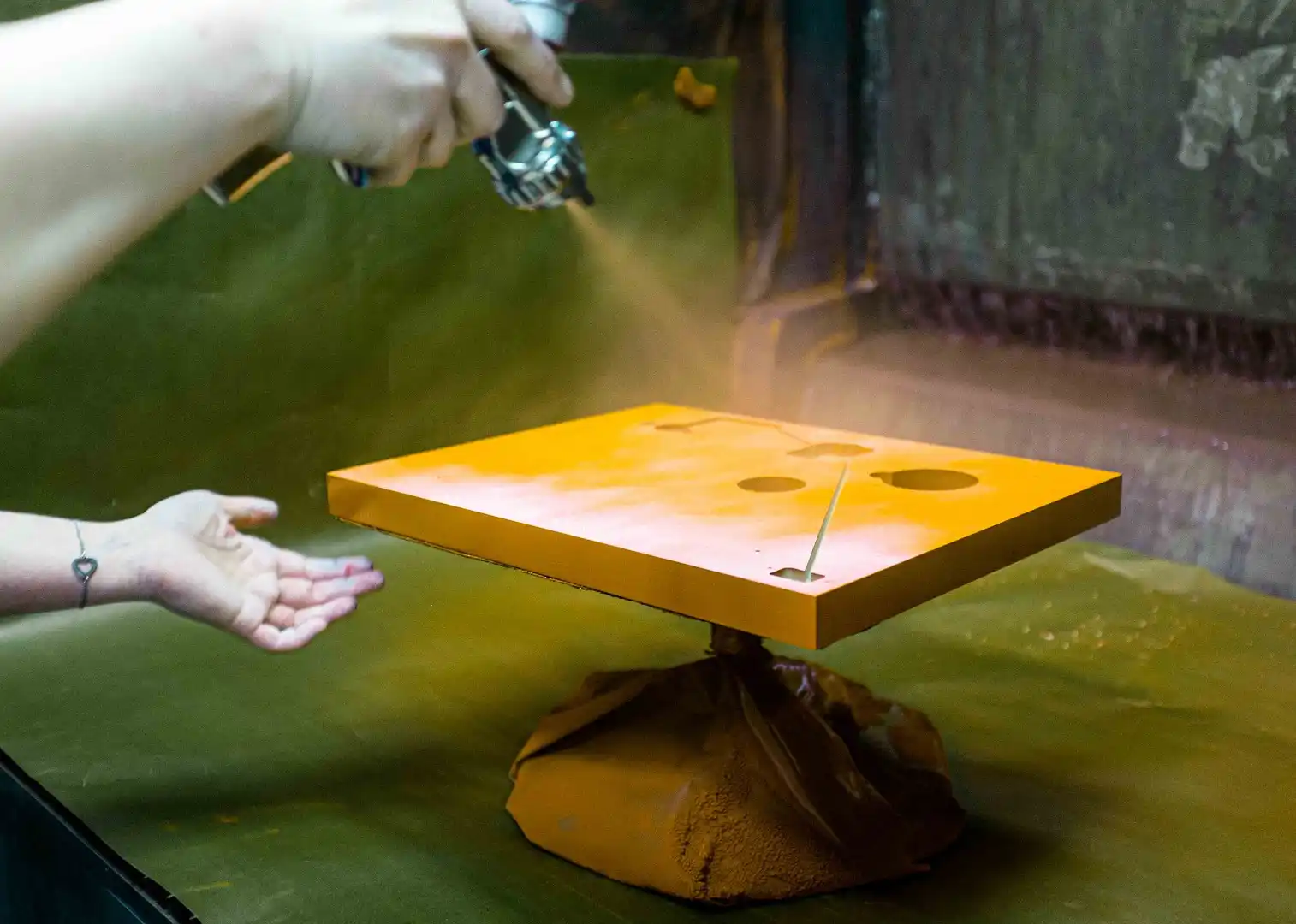
You might hear audiophiles throw around the word “plinth”. It’s just the technical term for the base of the turntable.
One of the plinth’s job is to act as a shock absorber, not only for aesthetics. Footsteps, heavy bass or vibrations from your speakers, or a passing truck outside can all send vibrations into the needle, which ruins your sound. A good plinth, whether it's made of dense MDF, solid wood, even metal, or high-tech acrylic, soaks up that unwanted energy before it ever reaches the record.
The Platter
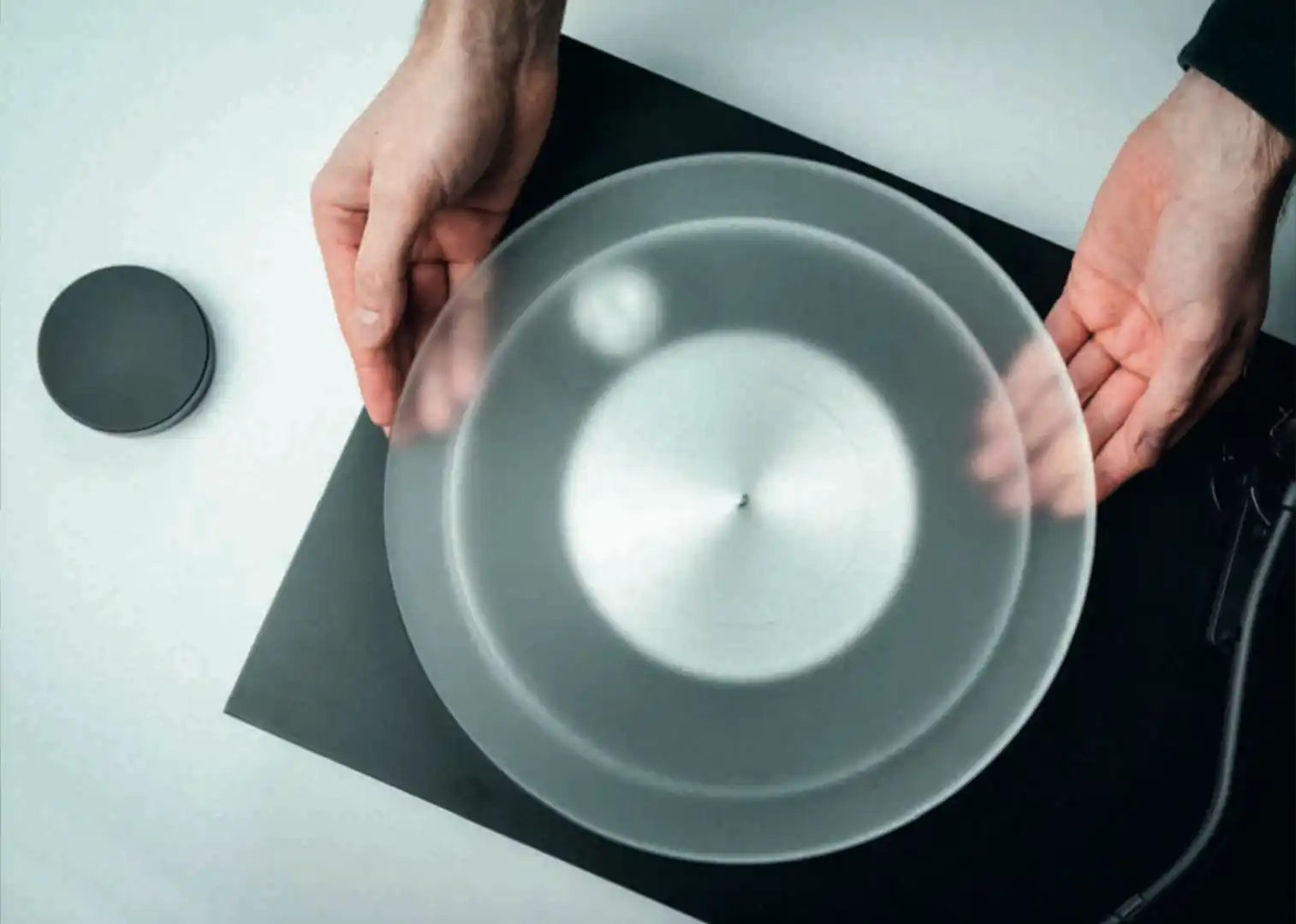
The platter is the heavy disc that your record actually sits on. When it comes to platters, mass is usually your best friend. A heavier platter acts like a flywheel; once you get it spinning, it wants to keep spinning at a perfectly consistent speed. This prevents "wow and flutter"—that annoying warping sound you hear when a record's speed fluctuates.
On top of the platter sits the mat. Rubber, cork, felt, or leather, the mat gives the record a soft place to grip and helps deaden any ringing metal sounds from the platter itself. However there are some manufacturers that want you to place your record directly on the platter. Those are made of special materials to allow for that.
The Motor
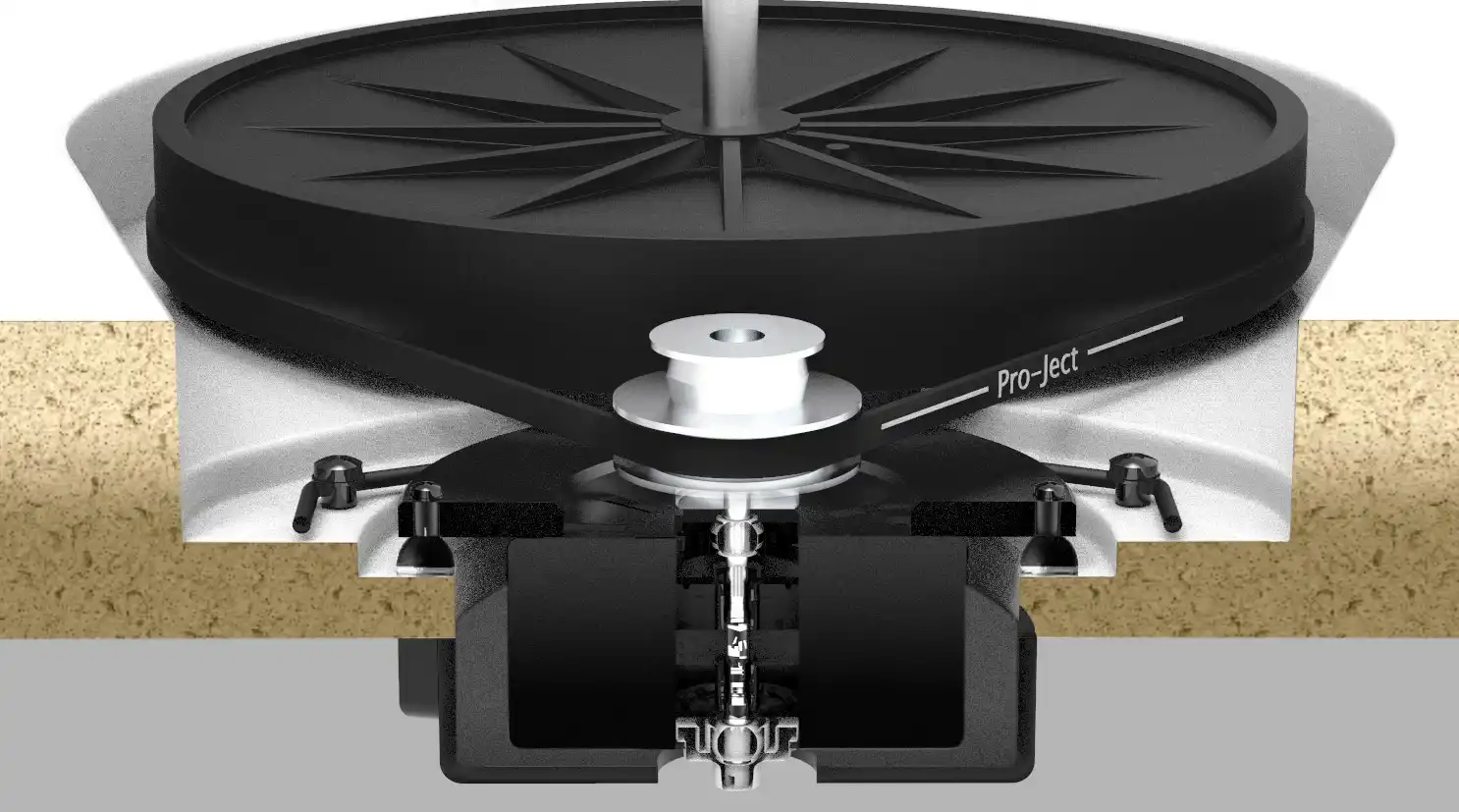
This is what makes the platter spin. You’ve basically got two camps here:
- Belt drive: An elastic belt wraps around the motor pulley and the platter. The belt acts like a rubber band, isolating the platter from the motor’s vibration. This is the gold standard for most home hi-fi setups.
- Direct drive: The platter sits directly on top of the motor. It spins up instantly and stays locked in at the exact speed. DJs need this, but you’ll also find it in some fantastic home turntables (like the legendary Technics 1200).
The Tonearm
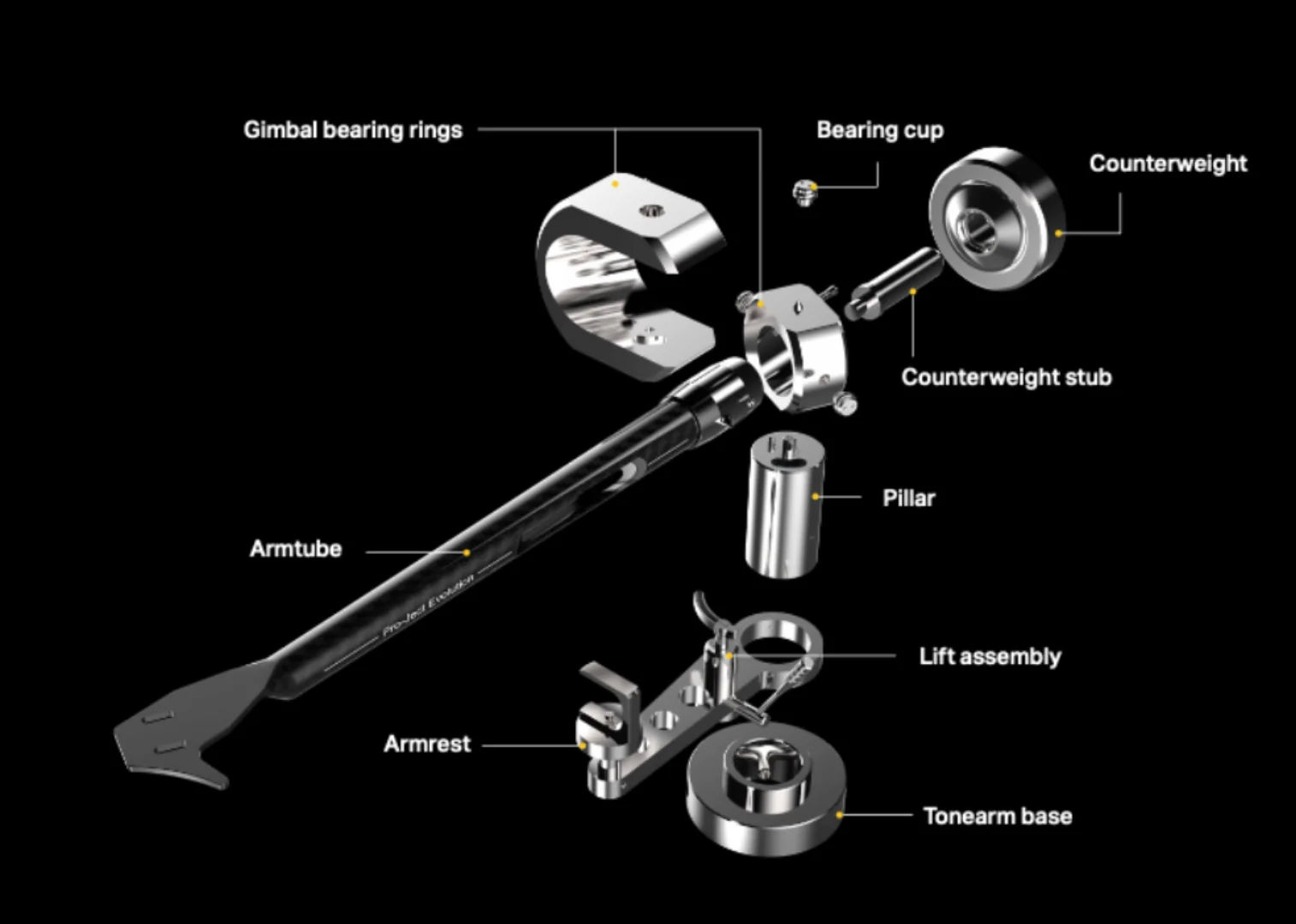
If the turntable was a surgical tool, the tonearm is the robotic arm holding the scalpel.
It needs to be incredibly stiff so it doesn't flex, but incredibly lightweight so it can easily glide across the record. At the back end, you’ll find the Counterweight. This adjustable dial lets you set exactly how heavy the needle presses down into the groove (the "tracking force"). Too light, and the needle skips. Too heavy, and you're essentially carving up your precious vinyl.
The Cartridge
This is where the actual magic happens.
We will go into this much deeper in another blog/guide because there’s a lot to unpack in cartridges.
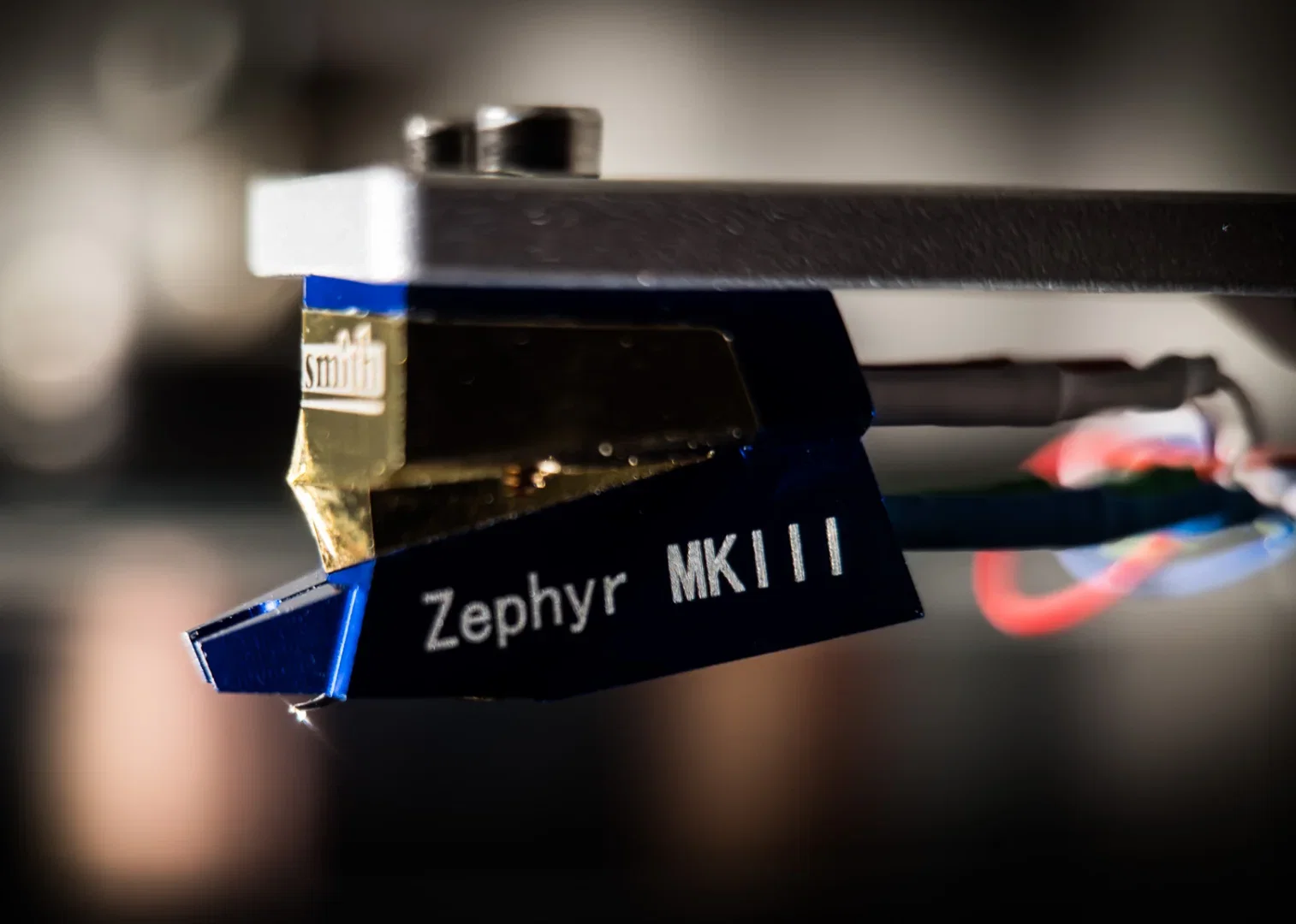
The Stylus is the needle itself—usually a tiny industrial diamond. It tracks the physical bumps in the record groove. The Cartridge is the little housing attached to the end of the tonearm. It’s a tiny electromagnetic generator. As the stylus wiggles through the groove, magnets and coils inside the cartridge translate that physical movement into an electrical signal.
That tiny electrical signal travels through the tonearm, out the RCA cables, into your amplifier, and eventually becomes music.
Putting it all together
Look back at those five parts and you’ll notice they’re all chasing the same thing: keeping that diamond (and therefore the sound) honest. The plinth soaks up what the room throws at it. The platter refuses to change speed. The belt keeps the motor’s buzz to itself. The tonearm holds steady without pressing too hard. And the cartridge translates what’s left into something your amplifier can use.
So when a $1,500 turntable pulls ahead of a $300 one, you aren’t paying for a better needle. You’re paying for everything around it that refuses to move.
That’s also why setup matters as much as the gear itself. A well-built table with the tracking force set wrong will lose to a modest one dialed in properly — and it will wear your records out faster doing it.
Questions about where to start, or what you’ve already got sitting at home? Come see us in the showroom or give us a call 1-800-513-8555. We’ve been answering this one since 1958. We also love geeking out over this stuff! Or have a look through our turntables & accessories whenever you’re ready.