
The Anatomy of a turntable
What we are actually looking at
Let’s say you walk into our shop, or you’re surfing our website & see a $1,500 turntable, and probably wonder why it looks so… simple. It’s just a board, a spinning circle, and a stick with a needle, right?
Yes... and no.
Since we opened our doors back in 1958, we’ve probably had thousands of questions about how turntables work. The truth is, a turntable's magic lies in its simplicity. Because a turntable has exactly one job, which is dragging a microscopic diamond through a tiny groove to pick up microscopic vibrations, without picking up anything else. That is the key, to not pick up “anything else”. We’ll get into what that means later.
To understand why some turntables cost $200 and others cost the equivalent of a small house, you just need to know the basic anatomy. Let’s pop the hood.
What Makes up a turntable
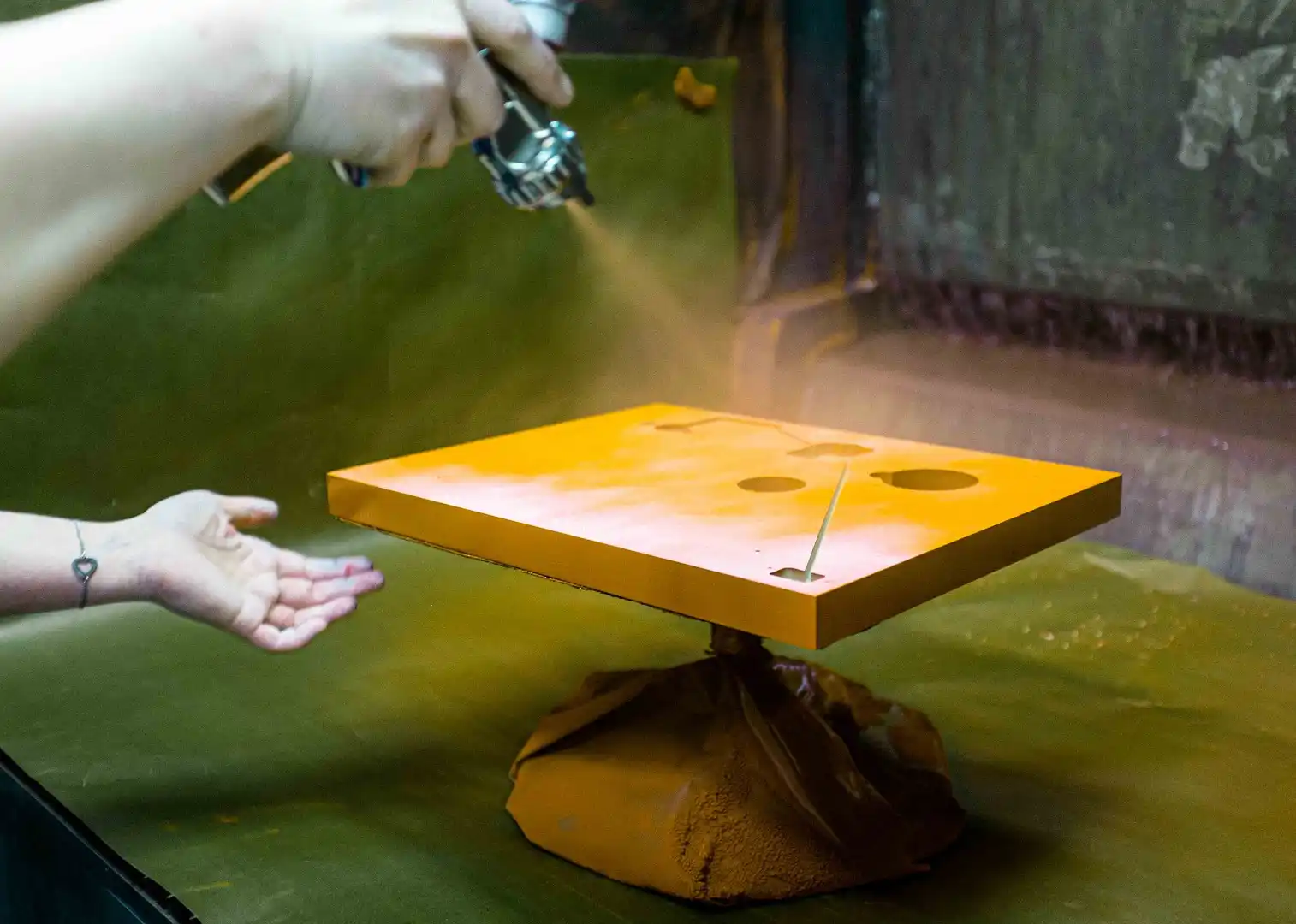
The Plinth
You might hear audiophiles throw the word “plinth”. It’s just the technical term for the base of the turntable.
The plinth’s main job is to act as a shock absorber, not only for aesthetics. Footsteps, heavy bass or vibrations from your speakers, or a passing truck outside can all send vibrations into the needle, which ruins your sound. A good plinth, whether it's made of dense MDF, solid wood, even metal, or high-tech acrylic, soaks up that unwanted energy before it ever reaches the record.
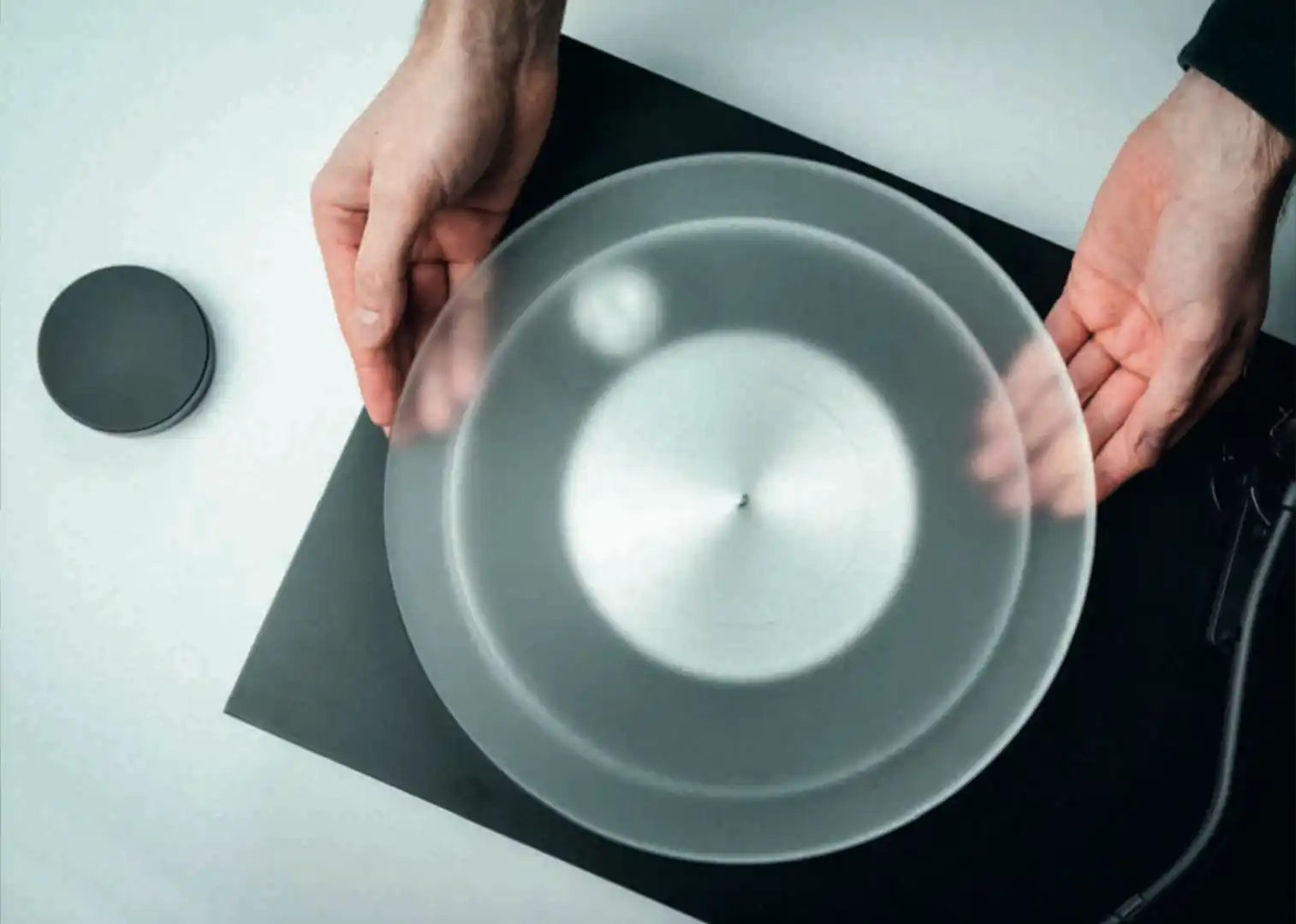
The Platter
The platter is the heavy disc that your record actually sits on. When it comes to platters, mass is usually your best friend. A heavier platter acts like a flywheel; once you get it spinning, it wants to keep spinning at a perfectly consistent speed. This prevents "wow and flutter"—that annoying warping sound you hear when a record's speed fluctuates.
On top of the platter sits the mat. Rubber, cork, felt, or leather, the mat gives the record a soft place to grip and helps deaden any ringing metal sounds from the platter itself. However there are some manufacturers that want you to place your record directly on the platter. Those are made of special materials to allow for that.
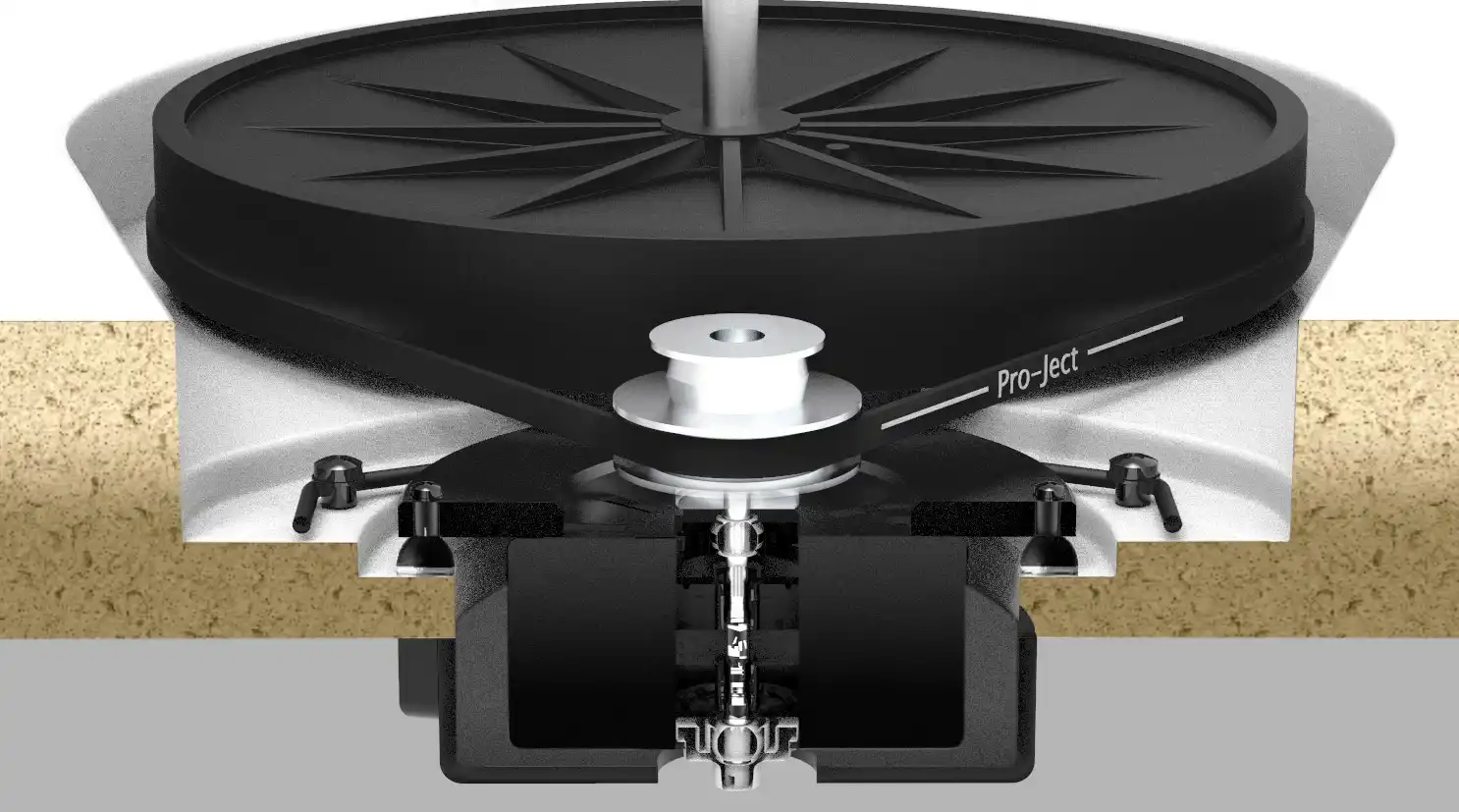
The Motor
This is what makes the platter spin. You’ve basically got two camps here:
- Belt drive: An elastic belt wraps around the motor pulley and the platter. The belt acts like a rubber band, isolating the platter from the motor’s vibration. This is the gold standard for most home hi-fi setups.
- Direct drive: The platter sits directly on top of the motor. It spins up instantly and stays locked in at the exact speed. DJs need this, but you’ll also find it in some fantastic home turntables (like the legendary Technics 1200).